
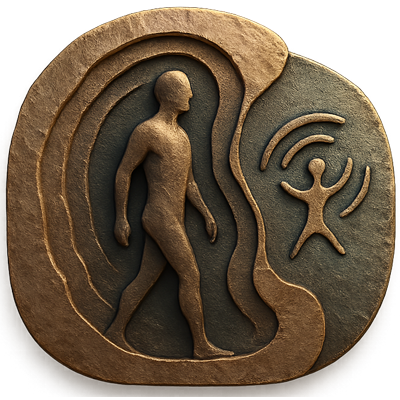
The Pattern Within the Human Tapestry
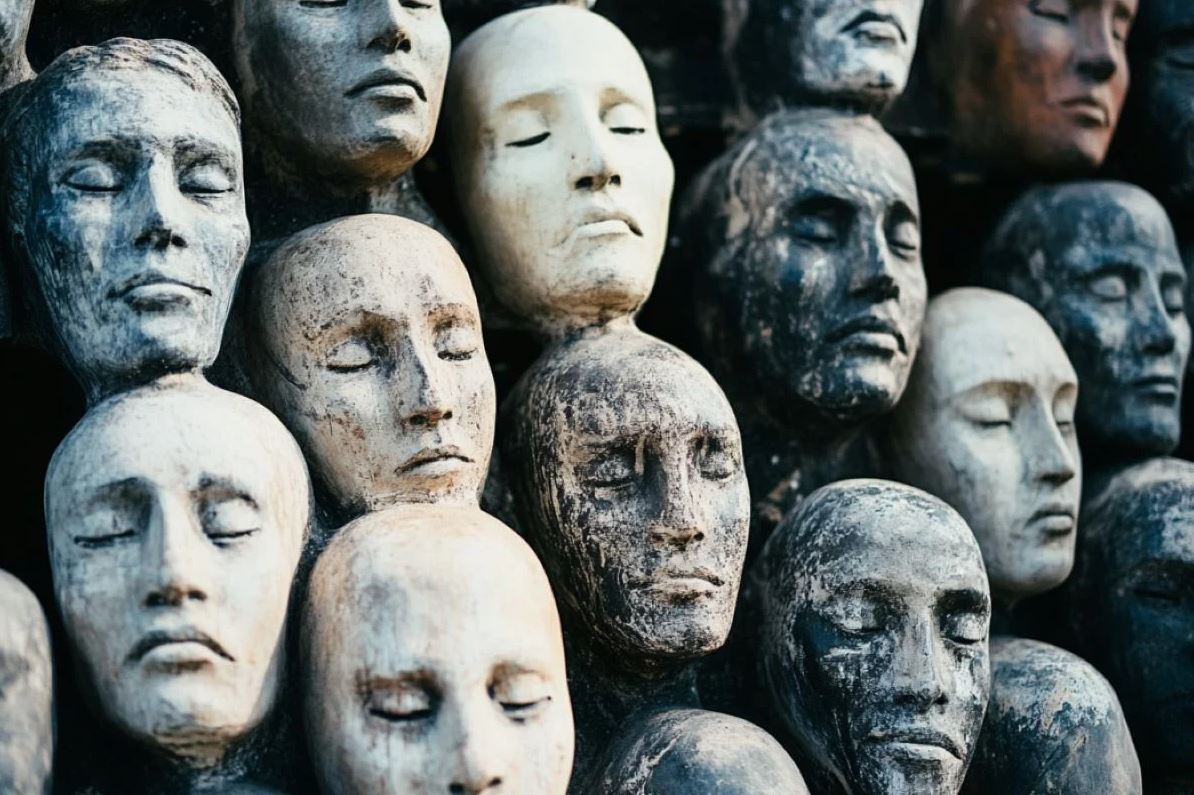
Minds, Symbols, and Traditions Transformed Survival into Civilization
The Birth of Shared Meaning
Culture began not as a monument or a manuscript but as a gesture. Somewhere within early gatherings of people, small signals of coordination began to appear. A raised hand meant caution, a shared glance meant understanding, a particular sound carried shared intent. Over time, these moments of mutual recognition solidified into traditions, habits, and signs that transcended the individual. Anthropology defines this as the birth of shared meaning, the turning point when knowledge became collective. With culture came memory that was not bound to the individual lifespan but preserved within practice. What began as instinctual imitation evolved into a system of transmission, allowing groups to carry behavior forward as if encoded in invisible threads. The story of cultural evolution begins with this transference of ideas, the invisible architecture that allowed the human mind to stretch across generations. Culture transformed experience into inheritance, creating a second form of evolution that ran parallel to biology but moved with the speed of thought.
Symbols and the Expansion of Mind
The ability to represent reality through symbols changed everything. The first marks carved into bone or pigment brushed upon stone were not decoration but transformation. Symbols allowed humans to detach experience from the present moment and manipulate it within imagination. A circle drawn on a wall could represent the sun, a hunt, or the cycle of seasons. Through symbolism, humanity invented abstraction, and with abstraction came the power to plan, remember, and dream. Anthropology views this as the great divergence that separated cultural evolution from natural selection. Ideas began to reproduce and mutate independently of bodies. A symbol that carried meaning for one generation could adapt and find new interpretations in the next. These early expressions became the seeds of language, art, and spirituality. The world was no longer only what could be touched but also what could be conceived. Through symbols, the mind learned to step outside itself and construct entire worlds of possibility, giving rise to the boundless landscapes of myth and imagination that still guide civilization today.
The Web of Communication
Language turned the symbolic into the social, binding individual thoughts into shared systems of understanding. The emergence of complex communication allowed knowledge to circulate, solidifying collective behavior into culture. With words, early communities could coordinate hunts, plan migrations, and share wisdom beyond immediate experience. Each linguistic innovation was a bridge that connected minds across space and time. Words condensed emotion into form, giving structure to memory and identity. Anthropologists see language as the first great technology of cooperation, a framework that allowed ideas to evolve faster than genes. Dialects diversified as groups separated, yet their roots remained the same, echoing the first patterns of speech that shaped social cohesion. Communication also enabled the emergence of teaching, storytelling, and ritual, transforming survival into legacy. Through the sharing of words, humans began to weave an ever-expanding web of influence, one that continues to stretch from prehistoric firesides to modern networks of global conversation.
Tradition as the Memory of Survival
Tradition acts as the heartbeat of cultural evolution, preserving behavior that once ensured survival long after its original purpose has faded. Within the repetitive gestures of song, dance, and custom lies the continuity of human experience. Each ritual reflects accumulated knowledge about environment, cooperation, and meaning. Anthropology treats these traditions not as stagnant relics but as living archives, adapting subtly to fit new contexts while preserving ancestral logic. A harvest festival, a rite of passage, or a pattern in textiles all carry echoes of ancient strategies for unity. Cultural evolution thrives on this tension between preservation and reinvention. Traditions endure because they are flexible, carrying both stability and transformation within their form. In studying them, one witnesses the evolution of social memory, how human communities store wisdom through action and emotion. The survival of a people depends not only on their ability to change but also on their ability to remember, and tradition serves as the bridge between both necessities.
The Birth of Art and Expression
When the first pigment met the surface of stone, humanity discovered the joy of creation for its own sake. Art was not only a reflection of life but also a declaration that life could be interpreted. In painting, carving, and music, people found a way to translate emotion into shared perception. Anthropology views art as a universal language of symbolic exchange, one that encodes both individual feeling and collective identity. From cave murals to sculptures and songs, artistic expression became the mirror through which societies understood themselves. Art also allowed experimentation, providing a safe arena for imagination before it was tested by reality. Cultural evolution gained acceleration through art because it encouraged variation, inviting new combinations of form and meaning. The aesthetic impulse shaped perception itself, teaching humanity to find pattern and beauty even in adversity. To study art is to study the rhythm of adaptation written upon the canvas of consciousness, an unbroken dialogue between creation and interpretation that defines civilization’s pulse.
The Rise of Social Complexity
As populations expanded, culture became architecture. The cooperation once needed for small bands of hunters grew into systems that governed thousands. The rise of agriculture and settlement transformed transient customs into institutions. Villages became cities, and traditions became law. Cultural evolution at this stage involved the codification of behavior into structure, giving birth to governance, religion, and economic exchange. Anthropology traces how social hierarchies emerged from earlier egalitarian models, not as natural inevitabilities but as cultural experiments in organization. These new frameworks allowed specialization, the division of labor, and the accumulation of surplus. However, complexity came at a cost, requiring constant negotiation between power and cohesion. Writing, record keeping, and shared mythologies served as the glue that held expanding societies together. Culture had evolved from spontaneous habit into deliberate design, from community memory into collective identity. The result was civilization, the outward expression of cultural evolution reaching critical mass, transforming cooperation into enduring architecture.
Innovation and the Evolution of Ideas
Culture does not evolve through random mutation but through intention, creativity, and necessity. Innovation is the engine that propels cultural evolution forward. Each discovery builds upon accumulated knowledge, reshaping human interaction with environment and imagination alike. The invention of tools, the domestication of plants and animals, and the construction of technology all illustrate culture’s ability to reconfigure its own trajectory. Anthropologists often describe this as cumulative adaptation, where progress becomes exponential because each generation inherits more than biology can provide. Yet innovation is not confined to mechanics or material goods. It exists within language, governance, art, and ethics. The ability to conceptualize new systems of value and knowledge is as vital as any technological breakthrough. The digital world of today is the latest phase in this continuum, an evolution of communication as significant as speech itself. Culture continuously reinvents its mechanisms of survival, demonstrating that evolution in humans is not just genetic but conceptual, a perpetual renewal of how we think, create, and connect.
The Interweaving of Global Cultures
Modern anthropology views cultural evolution not as isolated lineages but as an intricate network of exchange. Trade, migration, and communication have blurred boundaries, merging traditions that once developed independently. The diffusion of ideas across continents created hybrid forms of art, language, and belief, producing cultural ecosystems as diverse as biological ones. This interconnection has both enriched and challenged human societies. It fosters innovation but also forces confrontation with difference. The global landscape reveals how cultural evolution has entered a new phase, one in which diversity and integration coexist in delicate balance. What once took millennia now occurs in decades, as technology accelerates the transmission of meaning. Yet the underlying process remains the same: adaptation through interaction. The evolution of culture continues to reflect humanity’s oldest traits, curiosity, empathy, and resilience. Civilization Echo stands as a mirror to this ongoing synthesis, observing how the many voices of humanity still weave a single tapestry of becoming.
The Endless Conversation of Humanity
Cultural evolution never concludes. It is an ongoing dialogue between past and future, memory and invention. Each generation inherits traditions, reinterprets them, and sends them forward altered yet recognizable. The music, rituals, and technologies of today are not departures from our origins but continuations of them, extensions of the same impulse that once led our ancestors to carve symbols in stone or gather around the warmth of story. Anthropology teaches that culture is humanity’s second nature, a dynamic organism that evolves through interaction and imagination. The true story of civilization is therefore not a linear progression but a rhythm of transformation, a recurring pattern of innovation and remembrance. As long as humans communicate, adapt, and dream, the tapestry of culture will continue to grow, threading new colors into its vast design. The pattern within the human tapestry remains unfinished, an eternal work in progress woven from the shared imagination of all who have ever lived and all who are yet to come.