
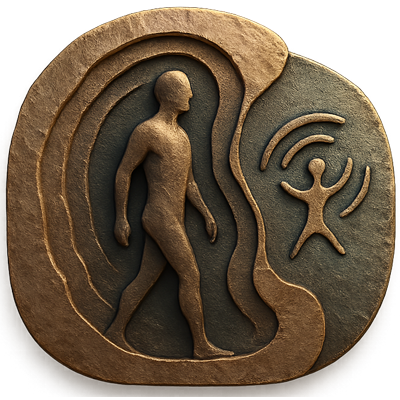
Before the Breath of Memory
Tracing the Hidden Pathways that Formed the First Humanity
The Dawn That Was Not Yet a Morning
Long before history began its careful accounting of kings and monuments, there was a dawn that had no witnesses and yet shaped everything that followed. The origins of humanity are buried not only in the bones of early ancestors but in the landscapes they once called home. Anthropology and paleontology converge upon this uncertain horizon, searching for the spark that separated the human lineage from countless other branches of life. In this deep time, there were no names, only instincts and gradual awakenings. Each fossilized jaw and scattered stone tool marks a threshold between survival and awareness. The story of human origins begins with adaptation, an unbroken series of experiments in endurance carried out by creatures who did not yet know that they were destined to wonder about themselves. To reconstruct that journey is to study not only evolution but also emergence, the slow unfurling of curiosity within the living clay of the earth. The first humans were not defined by conquest or speech, but by the quiet persistence of learning, by the first moment a creature looked outward and recognized the possibility of tomorrow.
Between Bone and Imagination
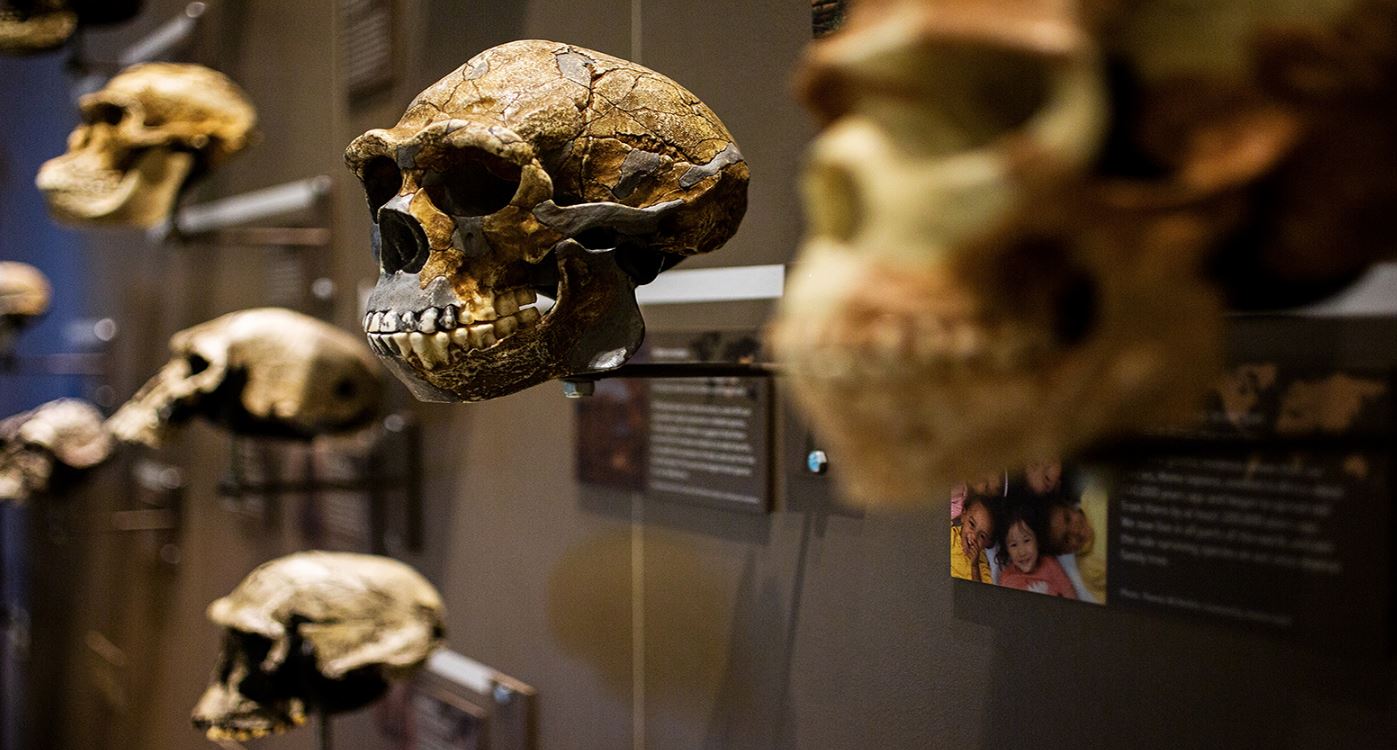
The fossil record is a fragile library of accidents, each bone preserved by chance and rediscovered through relentless pursuit. Within those fragments lies the story of transformation, of creatures who bridged the gap between animal behavior and self-reflective thought. The curvature of a skull, the angle of a femur, or the wear on a molar can reveal entire worlds of behavior and adaptation. These details allow anthropologists to reconstruct diets, climates, and even social structures of early hominins. Yet beyond the anatomical precision lies a deeper question: at what point did imagination ignite? The shaping of a stone flake or the selection of pigments for body decoration reveal a mind capable of abstraction. It is through imagination that bone became metaphor, that survival became story. The study of human origins is therefore not a mere biological pursuit but an exploration of consciousness taking form in flesh and gesture. The bones of our ancestors speak, not in words but in geometry, describing how awareness sculpted the very skeleton that carries it.
Fire and the Invention of Belonging
Among the great thresholds of humanity, the mastery of fire stands as both symbol and substance. It transformed raw existence into community, allowing warmth, protection, and conversation to flourish in the same light. The discovery of controlled flame was not a single moment but a gradual intimacy with a force that demanded respect as much as ingenuity. Early humans learned that fire could extend the day, soften food, and forge cooperation. Around those flickering centers of heat, storytelling was born. Anthropology interprets fire as the original social contract, a gathering that defined inclusion and trust. The embers carried within animal hides from one campsite to another were not only survival tools but the first artifacts of continuity. Firelight allowed reflection, casting both shadow and identity upon cave walls. Through its glow, the human mind began to perceive time, linking the immediate comfort of warmth with the enduring question of origin. It was at the edge of that flame that the first sense of belonging took shape, where the instinct for safety evolved into the awareness of kinship.
The Journey Out of Africa
All living humans trace their ancestry to a single continent, the cradle from which countless migrations unfurled. The story of dispersal is both scientific and poetic, describing not a single exodus but a rhythmic pattern of departures and returns. Genetic studies reveal that humanity’s earliest explorers walked not out of ambition but necessity, following herds, seasons, and shifting rivers. Each step outward redrew the boundaries of possibility. From Africa to the Middle East, across Asia, into Europe, and eventually the Americas, these travelers adapted to climates that demanded ingenuity and cooperation. Anthropology views this movement not as an expansion of territory but as the spreading of potential. Cultures diverged, languages formed, and identities evolved, yet all retained the imprint of that first great wandering. The earth itself became a map of connection, a living document of endurance and transformation. Every mountain pass and coastal plain holds the memory of those who crossed it, each footprint another verse in the global poem of migration. To understand where we began is to understand that humanity’s truest homeland is movement itself.
Hands That Remembered the Sky
The human hand is both an instrument of precision and a remnant of the arboreal past, shaped by the balance between grasping and creating. Through it, early humans built tools, shaped symbols, and forged the physical expression of thought. Anthropology regards the hand as the most visible link between biology and culture, a bridge between evolution and invention. The dexterity that once clung to branches became the artistry that carved stone and painted walls. Every mark left upon an object was an extension of the body’s memory, a conversation between muscle and imagination. The prints left upon cave ceilings and canyon walls are not signatures of ownership but of presence, affirmations that say, “I was here, and I understood.” These impressions endure as the most primal form of communication, outlasting languages and nations. They remind us that the gesture of creation preceded the word, and that the act of making was itself an early declaration of identity. The story of humanity’s origins cannot be told without the hand, for it carried the weight of survival and the grace of meaning.
The First Symbols and the Birth of the Abstract
Symbols emerged from the intersection of necessity and imagination, from the human desire to represent the invisible through tangible form. Long before alphabets and alphorisms, early people marked bones with rhythmic notches or arranged stones in deliberate circles. These were not idle decorations but proto-languages of awareness, systems that translated emotion into pattern. The anthropological significance of these markings lies in their universality. Wherever early humans went, symbols followed, bridging isolation with recognition. The spiral, the circle, the handprint, and the line became sacred geometries of existence. They were early attempts to map not territory but meaning. In those simple designs, the mind rehearsed abstraction, learning to compress complex ideas into visible order. From these roots grew mathematics, art, and religion. Every temple, painting, and manuscript carries within it the genetic memory of those first symbols, reminders that the human mind has always sought to interpret itself through metaphor. The origin of symbols is therefore the origin of reflection, the moment when thinking became self-aware enough to leave a trace.
Voices Across the Generations
Language is the invisible architecture that allowed human culture to transcend biology. It turned survival from a personal endeavor into a shared narrative. The earliest spoken languages are forever lost, yet their echoes persist in rhythm and tone. Anthropology reconstructs them through comparative linguistics, tracing how sound families evolved across continents. Language enabled instruction, memory, and art, weaving communication into the fabric of daily life. A word could summon a memory or command a hunt, binding individuals through shared understanding. Through speech, humanity learned to collaborate in ways no other species could. Oral tradition carried knowledge across centuries before writing existed, ensuring that ideas could survive the fragility of memory. Each story told by firelight became an archive, each proverb a portable philosophy. The invention of syntax transformed noise into structure, turning breath into history. To speak was to build, to craft invisible architecture from air. In this way, every utterance became an act of creation, extending the lineage of thought as surely as any genetic inheritance. Language is not merely a tool of expression, but the very ground upon which civilization walks.
Becoming Human in Mind and Memory
What truly defines humanity is not anatomy but awareness, the self-reflective consciousness that perceives both life and mortality. Anthropology studies this emergence through behavior rather than biology, through art, ritual, and cooperation. To be human is to remember, to project identity beyond the immediate. Burial practices from tens of thousands of years ago reveal compassion and imagination intertwined, proof that early people understood the boundary between presence and absence. The objects buried with the dead were tokens of memory, affirmations that existence continued beyond perception. In these gestures lies the essence of humanity, the refusal to accept finality without meaning. Over time, this capacity for reflection became the root of ethics, philosophy, and spirituality. The evolution of mind is not measured in brain size but in empathy, in the capacity to imagine oneself within another’s experience. Every civilization, from the earliest hunter-gatherers to the modern world, continues this same project of meaning-making. To explore human origins is therefore to examine the continuous awakening of awareness, the slow shaping of identity across epochs. We are the sum of every thought that learned to see itself thinking.
The Continuum of Becoming
The study of human origins does not seek an ending but a continuum. Humanity is still evolving, still rewriting its own story through technology, art, and imagination. The fossils we uncover are not ancestors of another species but mirrors reflecting our own unfinished form. Civilization Echo embodies that recognition, inviting reflection upon the vastness of time and the persistence of curiosity. To know where we began is to see how every invention, from stone tools to digital networks, belongs to the same impulse: to understand and to connect. The ancient fires have become screens and stars alike, yet the purpose remains unchanged. We still gather around light, we still tell stories to preserve meaning, and we still reach into the unknown seeking reflection. Human origins are not confined to prehistoric caves but continue in every gesture of creation and inquiry. Each discovery, whether found in a desert excavation or within the neurons of a modern brain, extends the dialogue between past and possibility. The first breath of awareness has never ceased. It expands through each generation, shaping a legacy not of perfection but of becoming, an unending conversation between what we were and what we might yet become.