
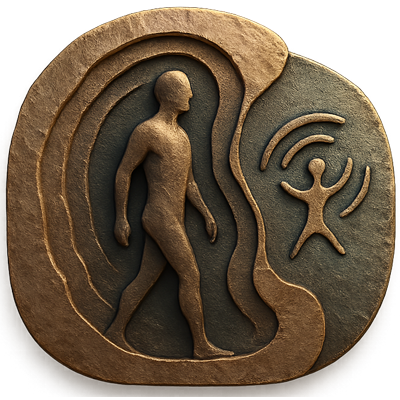
Minds That Learned to Imagine Tomorrow
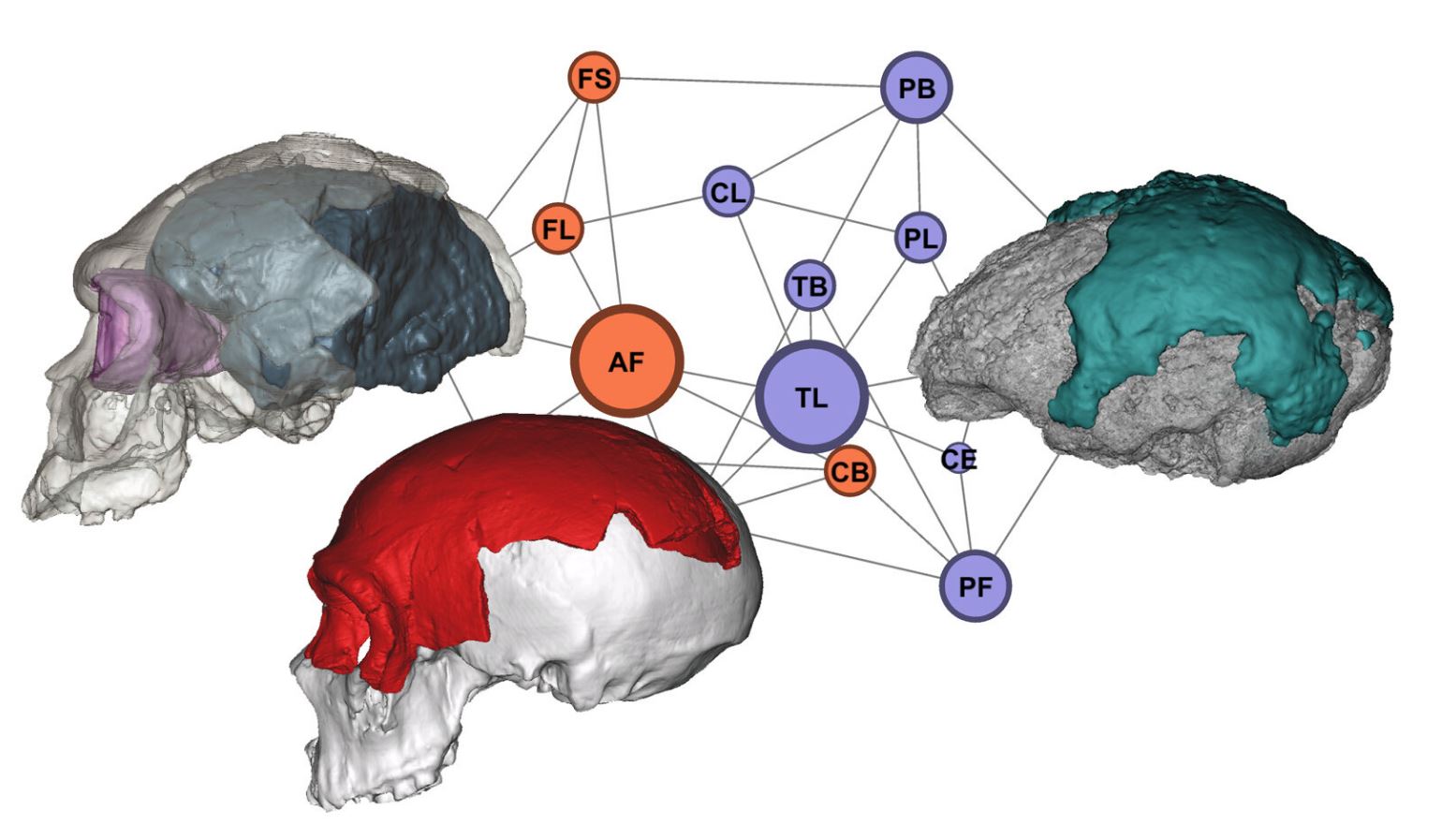
Tracing how attention, memory, cooperation, and tools reshaped thought from foraging camps to cities of research
Attention that followed survival then reached for play
Before lofty ideas and careful theories, minds first mastered the art of noticing. A rustle in dry grass could be wind or whisker, so early observers learned to hold focus just long enough to sort new from ordinary without wasting daylight. This practice of graded attention sits at the root of cognitive evolution. It trained brains to switch between sharp vigilance and soft scanning, to widen the scene for context, then to narrow on a trace that might feed a fire or save a child. Out of that rhythm grew curiosity. Once stomachs were full and wolves far, the same circuits that guarded life chased puzzles for joy. Children poked ant trails and listened to echo in caves, and adults mapped seasonal clues into stories that predicted fruit and fish. Play rehearsed problem solving in low stakes arenas, which allowed trial and error without disaster. Tag taught pursuit and evasion. Hide and seek taught stealth and inference. Rhythm games taught timing that later guided nets and cooperative hunts. As attention became flexible, memory took the hint. Brains began to tag moments with feelings, because emotion helps recall stick. Fear marked unsafe hollows. Laughter marked friendly paths. Gratitude marked generous neighbors. The result was an attention system that could change gears while keeping meaning in view. That quality still separates skill from stumble. A maker who notices a faint shift in grain avoids a split when carving. A teacher who hears a pause in a student voice slows the lesson and prevents shame. Evolution did not insist that minds stay only on alarms. It taught minds to browse, to dwell, and to return, which opened a lane for wonder and for the long patience that science and craft both require.
Hands that taught brains and tools that taught plans
Grasp came before grammar, and the hand rehearsed logic long before mouth and script. Stones that fit the palm begged shaping, and flakes that flew taught prediction because each strike carried a lesson about angle and force. When a shard sliced cleanly through plant fiber, the brain caught the link between form and function, then stored the recipe as a sequence rather than as a single act. Toolmaking turned scattered movements into programs that could be repeated and improved. It also braided vision with touch. Makers learned to see potential edges inside uncut rock and to feel a future surface under living wood. Such imagination is a form of time travel. It requires holding a plan in working memory while adjusting to feedback from each pass of the wrist. Fire added a second school. Controlled heat transformed stone, clay, and food, and each transformation deepened causal thought. Roast meat answered a different bite than raw, char tempered edges, and earthen pots stiffened into containers that allowed simmering and storage. With pots came recipes, which are algorithms with flavor. Do this first, wait until steam thins, add this handful, stir until the color matches yesterday. Groups that shared these programs learned to coordinate beyond the moment. The hearth became a clock that taught patience and sequencing. By the time baskets held seeds for planting, brains had practiced the mental moves needed to delay reward and to invest effort for future gain. Tools therefore shaped the scaffolding of planning, and planning opened the door to complex cooperation, ritual schedules, and the long term projects that leave monuments on hills and legible layers in soil.
Memory that braided story with map
Memory expanded when groups began to survive by teaching rather than by mere imitating. Stories compressed large landscapes into portable guides. A tale about two sisters who argued at a river fork taught listeners to read currents where a safe crossing hides. A sequence of verses named fruits in ripening order, then matched each fruit to birds that carry seeds, then linked both to rains that rise over distant ridges. Such structure is not indulgence. It solves a storage problem. The brain keeps narrative better than lists, so knowledge piggybacks on plot. Repetitions and rhythm supply hooks for recall, while character and image add glue. Genealogies tied memory to responsibility. By reciting grandparent lines, a speaker pledged allegiance to rules that protect turf and peace. By reciting allies beyond the ridge, a messenger promised safe passage across shared pasture. Spatial memory rose with social memory, because who lived where mattered as much as which plant healed which wound. Wayfinding became a duet between hippocampus and story. Caves remembered winter meat. Springs remembered summer rest. High ledges remembered warning fires and the speed of a storm rolling in from the plateau. As villages fixed with fields, another layer formed. Myths embodied the calendar so that planting festivals aligned with cycles of light. Children learned lunar phases as chapters rather than as diagrams, which let them carry accurate schedules without wax tablets. Across these changes, memory shifted from private store to public service. A good rememberer kept roads safe, markets fair, and disputes short, and that status encouraged others to practice the same craft, which in turn selected for minds that could bind past to path with grace.
Language that carved categories and empathy that softened edges
Words do not only point. They cut and gather. When a group coins a term for a cloud that signals a certain wind, it sharpens prediction. When a group coins a term for a promise that survives winter, it sharpens ethics. Language allows category building, and categories allow speedy thought. Yet vocabulary alone would be a blunt instrument without empathy to guide use. Minds co evolved with social needs that rewarded accurate reading of faces and postures. Infants tracked gaze before they tracked rules, and that early skill supported later feats like sarcasm detection and trustworthy debate. Communities trained both strands at once. Proverbs packed shared wisdom into compact forms that could be deployed without insult. Lullabies packed comfort into tones that calmed skin and breath. Negotiations mixed careful terms with respectful silence so opponents could save pride while trimming claims. Syntax expanded under these pressures. Conditional forms allowed caution, because if statements explore outcomes without injury. Tense and aspect allowed fairness, because speakers could keep separate an act, its consequences, and its repair. Metaphor grew thick where abstraction needed bridges to body. A heavy choice, a bright idea, a cold welcome, these are mental shortcuts that harness touch and temperature for thought. Once writing caught speech, loops closed. Text trained style, style trained clarity, clarity trained policy. With each feedback round, brains tuned networks that integrate sound, sign, and symbol. Those networks still power learning today. A classroom that combines demonstration, discussion, and written notes recruits more pathways than any single channel. The lesson from evolution is simple. Thought loves company, both in the sense of many minds and in the sense of many modalities that keep meaning solid during stress.
Cooperation, teaching, and the birth of shared minds
Brains alone can do much, but brains in groups do more, and evolution exploited that truth by favoring cultures that made teaching common. Camps that welcomed apprentice learners produced more reliable hunters and more careful fire keepers. Villages that set aside time for explanation produced more consistent potters and more durable roofs. Teaching forced experts to model their own decisions aloud, which refined concepts and exposed gaps that solo practice can hide. Observation also taught, yet deliberate instruction expanded reach because it targeted fragile steps that a novice might miss. Shared minds emerged when teams synchronized attention. Builders counted together while lifting, then counted again while setting stones to avoid slips. Sailors sang while hauling to align force with wave. Farmers called out pests and remedies so that improvement traveled faster than insects. Ritual served cooperation too. A chant at the gate reset tempers after disputes in the fields. A dance after hard seasons soothed envy and restored willingness to loan seed. As complexity grew, societies invented roles for coordination. Scribes maintained memory across rulers. Judges maintained fairness across neighbors. Traders maintained bridges across language and climate. Each role supplied cognitive scaffolding to the rest, and together they formed a distributed intelligence that could adapt faster than any one person. This social brain produced innovations like grain accounting, standard measures, and reputation systems that punished deceit without constant violence. Shared minds, then, are not metaphors. They are data structures made of custom, habit, and trust, and they can fail if maintenance stops. Their health depends on time budgets that protect explanation and on rituals that reallocate credit toward teachers and repairers, not only toward inventors.
Numbers, maps, and the rise of external memory
Counting began with fingers and tokens, then expanded into marks that could travel without a body. Tallies turned goats and jars into scratches that anyone with training could audit. From tallies grew place value, a profound shortcut that allowed large thoughts with small symbols. With that shortcut came multiplication and division that could be taught, tested, and scaled. Maps offered an external cortex for wayfinding. They distilled messy terrain into lines and signs that let messengers imagine routes never walked. Charts for rivers and stars doubled as prediction machines. A pilot with a planisphere could plan a crossing weeks in advance, then adjust when clouds played tricks. Diagrams did equal work for craft. A loom draft recorded interlacement patterns that weavers could reproduce without sitting at the same beam. A kiln schedule recorded temperature steps that potters could rehearse even after masters died. External memory allowed error without erasure. Plans could be corrected rather than lost. Children could inherit more than stories. They could inherit structured recipes for reasoning. Over centuries, libraries collected these recipes, then devised tools for search that reduced the cost of surprise. Indexes, concordances, and catalogs gave thinkers the power to leap across subjects, which fostered analogy and the habit of hypothesis. External memory also humbled pride. When proof sat on a tablet for all to inspect, authority had to argue rather than command. The long trajectory points to a simple insight. Minds grow taller when they learn to lean on stable supports that anyone may examine. That has policy consequences. When societies invest in shared references, kindergarten to archive, they lengthen the stride of every future citizen at once.
Technology, overload, and the craft of mental ecology
Recent centuries piled channels upon channels until attention became a resource as scarce as copper. Printing multiplied voices, telegraph and telephone shrank distance, recorded sound fixed performance, photography paused time, and networks now pour bright novelties into pockets from waking to sleep. This flood feels new, yet the challenge has ancient roots. Minds evolved in busy forests and crowded camps where signals outnumbered safe reactions. Success depended on filters, on shared norms, and on design of spaces that cue rest as well as action. Mental ecology is the craft of balancing those elements. It asks households to protect quiet like they protect clean water. It asks schools to teach note taking and summarizing as core survival skills. It asks offices to favor deep blocks of time over constant buzz. It asks platforms to pace alerts and to present consent simply. When ecology is healthy, tools enlarge judgment. When ecology is poor, tools bend judgment toward habit loops that burn hours and blur aims. The brain stays plastic across life, so repair remains possible. Meditation, long walks, and device sabbaths are not fashion. They are restoration techniques that let attention recover tone, much like sleep restores muscle. Communities can support this repair by setting norms for reachable hours, by grading urgency with calm language, and by giving public praise to patient work. Cognitive evolution gave us flexible attention and powerful memory. Mental ecology keeps those gifts from scattering. Without it, even the best search and the fastest feeds will not give wisdom. With it, even modest libraries and simple networks can grow citizens who read carefully, decide kindly, and change course when better maps arrive.
Foresight as the next apprenticeship
The arc from wary glance to written theorem suggests that the next great skill will be foresight practiced as a craft. It asks minds to hold several futures, to test them gently, and to choose paths that leave options open for neighbors yet unborn. The ingredients are old. Attention that can scan and focus. Memory that can bind story to map. Language that can apologize and revise. Cooperation that honors teachers and credits repair. External memory that distributes proof. Mental ecology that protects depth. When joined, these habits yield thinking that is bold without cruelty. A village that designs a floodplain market with light structures and quick release stalls shows foresight. A school that pairs coding with ethics and field work shows foresight. A clinic that teaches sleep along with medicine shows foresight. None of this requires magic. It requires daily patience and a taste for iteration. Cognitive evolution never stopped, and it will not stop tomorrow. Each meal we share, each rule we write, each child we invite into a circle where questions are welcome, moves the story along. Let us build rooms where imagination meets accountability, and let us keep archives that future hands can extend without asking permission from ghosts. If we do, our descendants will inherit not only clever machines, but also reliable ways to stay human together when choices grow hard.