
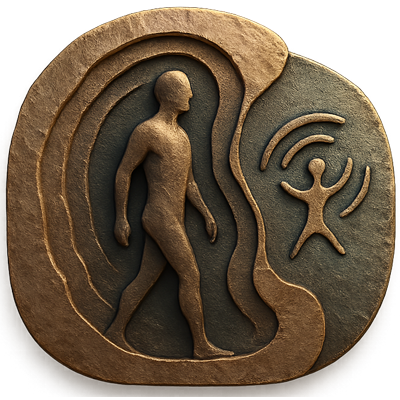
Bridges Across the Invisible
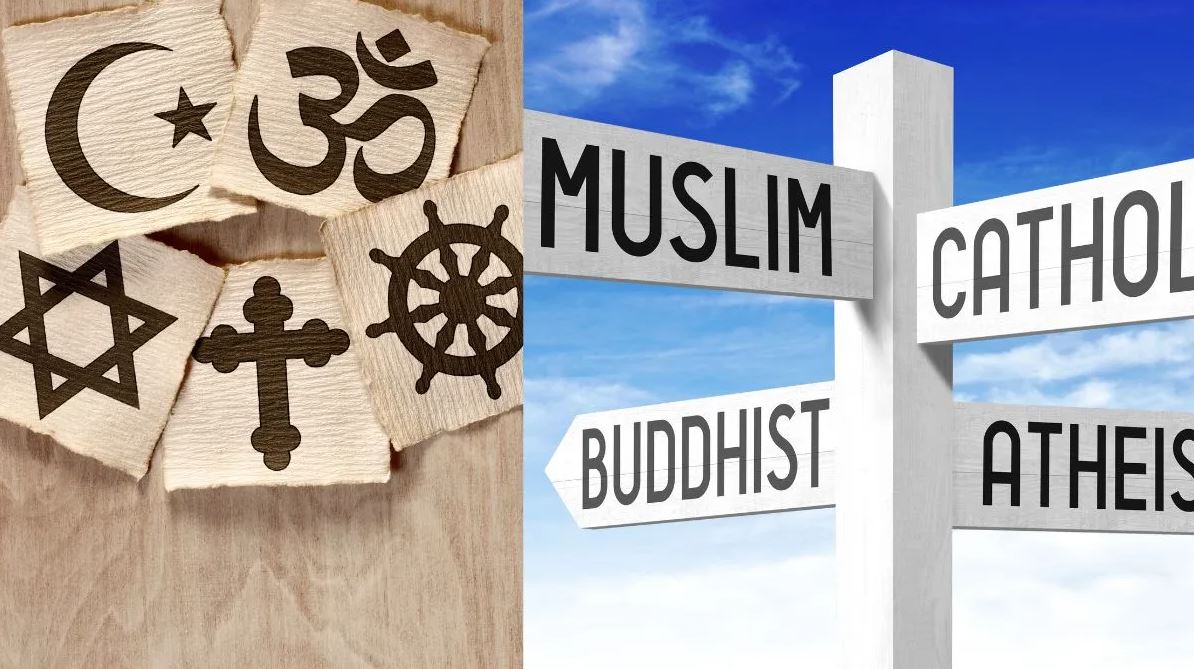
Humanity’s search for meaning shaped parallel visions of the sacred across civilizations
The shared question at the heart of belief
Every religion, from the smallest tribal tradition to the most global faith, begins with a question that cannot be answered by sight alone. Why are we here, and what holds the world together when everything visible fades? Comparative religion seeks not to prove or disprove but to listen across boundaries, to recognize the shared architecture of yearning. Whether through prayer, meditation, or moral law, religions offer structures for the same impulse: the wish to link the finite with the infinite. The shaman in a Siberian forest, the monk in a Himalayan monastery, and the philosopher in an ancient Greek school each stand in continuity, translating the ineffable into symbol. Their languages differ, yet their motives converge. The diversity of belief therefore becomes not a contradiction but an expression of human plurality. The study of these convergences reveals that faith is not an isolated invention but a cultural ecosystem, growing wherever consciousness meets mystery. It shows that beyond doctrinal difference lies a deeper kinship, one rooted in humanity’s instinct to imagine coherence in the face of mortality and change.
Creation myths and the language of origins
Across cultures, creation stories form the first theology, explaining how the world began and why it matters. In Mesopotamia, divine struggle divided chaos into order. In China, the giant Pangu carved heaven and earth from an egg of darkness, his breath becoming wind and his voice becoming thunder. The Hebrew Genesis narrates creation through speech, where the word itself becomes power. Hindu cosmology envisions an endless cycle of birth, destruction, and rebirth sustained by Brahman’s infinite consciousness. Indigenous traditions of the Americas often depict creation as cooperation, where animals, ancestors, and deities shape reality together. These narratives share a vital similarity: creation is always relational, requiring dialogue between forces, whether harmonious or conflicted. The pattern suggests that early societies saw existence as something woven rather than imposed. To understand the beginning was to understand one’s place within a living continuum. Comparative study reveals that creation myths are less about cosmology and more about responsibility. They remind humanity that the world is not inherited but sustained, and that creation continues whenever awareness recognizes itself as part of the whole.
The divine and its mirrors in human form
Though gods take countless shapes, their portrayal reflects the societies that worship them. In the polytheisms of antiquity, divinity was distributed across pantheons, allowing specialization and intimacy. Egyptian gods wore animal heads to express qualities beyond the human, while Greek deities retained mortal emotions to emphasize kinship. Monotheistic traditions later gathered divinity into unity, framing God as an all-encompassing presence rather than a member of a cosmic community. Yet even within this unity, diversity persisted through prophets, angels, and saints who bridged heaven and earth. Buddhism, rejecting a creator deity, turned inward, proposing enlightenment as the ultimate divine state attainable through awareness. Taoism envisioned the sacred not as being but as flow, an unseen balance that cannot be named without distortion. Comparative analysis shows that these portrayals are not contradictory but complementary. They outline a spectrum between transcendence and immanence, between gods above and divinity within. Each form answers a psychological need: to encounter the sacred as both companion and mystery. Across continents, humans found themselves reflected in their gods, and their gods reflected within themselves, forming an endless loop of recognition that sustains faith.
Rituals as the choreography of belief
Ritual is the language through which religions embody their ideas. It transforms invisible conviction into communal rhythm. The prayer mat, the drum circle, the incense rising in a shrine, each translates abstraction into tangible motion. Comparative study reveals a shared grammar of repetition, purification, and offering. In the Vedic fire ritual, clarified butter feeds flame to sustain cosmic order. In Catholic Mass, bread and wine become symbols of renewal. Among the Navajo, sand paintings restore harmony by recreating the pattern of balance between humans and nature. The act matters as much as the meaning, because ritual works through participation. It unites individuals in shared time, collapsing the distance between divine and human. Anthropologists note that rituals also teach memory. The body learns what the tongue forgets, preserving culture through movement and song. Even secular societies inherit this pattern in ceremonies of mourning, marriage, and remembrance. The persistence of ritual across eras proves that belief requires performance to remain alive. Without gesture, even the holiest word risks silence. Ritual is how the sacred learns to breathe within history.
The moral compass and the pursuit of order
All religions seek to define how one should live, yet their moral frameworks arise from distinct visions of order. The Ten Commandments of the Hebrew tradition declare ethics through divine authority, binding morality to covenant. In Buddhism, moral law stems from karma, where intention shapes consequence across lifetimes. Confucianism roots virtue in social harmony rather than divine will, emphasizing relationship and duty over metaphysical reward. The Quranic revelation unites moral and spiritual law, establishing justice as both divine decree and social necessity. Among Indigenous traditions, morality often flows from ecology, measured by respect for the land and the balance of all living things. Comparative religion reveals that ethics is where theology meets daily life. Belief becomes credible when it cultivates compassion, fairness, and humility. Even in secular philosophy, echoes of these principles remain. Modern declarations of human rights borrow the universality of moral ideals once expressed as sacred commandments. To study moral systems comparatively is to recognize that goodness has never belonged to one faith. It is humanity’s shared language of conscience, written in different alphabets but pointing toward the same center.
Time, death, and the cycles of return
Religions differ sharply in how they conceive time and mortality. Abrahamic faiths view time as linear, beginning with creation and culminating in judgment or redemption. Eastern philosophies often treat time as cyclical, envisioning existence as a wheel of birth, decay, and rebirth. The difference shapes not only theology but culture itself. A linear worldview emphasizes progress, responsibility, and ultimate accountability, while a cyclical one emphasizes harmony, patience, and renewal. Attitudes toward death follow similar patterns. In Christianity and Islam, death separates soul from body until resurrection or paradise, while in Hinduism and Buddhism it marks transition rather than end. Ancestor veneration bridges these extremes, treating death as continuity rather than rupture. The living maintain the presence of the departed through ritual and story, ensuring that memory sustains identity beyond biology. Comparative study shows that beliefs about time and death reflect each society’s experience of nature. In harsh climates, faith may emphasize endurance and final reward, while in fertile regions it may emphasize regeneration. Yet every tradition, whether linear or circular, offers consolation through meaning. To imagine a pattern beyond decay is to refuse despair, and in that refusal humanity affirms its deepest faith.
Encounters, exchanges, and the birth of new faiths
Religious history is a story of dialogue as much as devotion. When cultures meet, beliefs rarely remain untouched. The Silk Road carried not only goods but ideas: Buddhism spread from India into China and Japan, adopting local aesthetics and ethics along the way. Greek philosophy influenced early Christian theology, while Persian dualism shaped concepts of good and evil across the Near East. In Africa and the Americas, colonialism created forced conversions yet also hybrid practices that preserved indigenous spirituality beneath imported symbols. Comparative religion examines these fusions not as corruption but as evolution. Every synthesis represents adaptation, a creative negotiation between memory and necessity. The Baháʼí Faith, Sikhism, and modern interfaith movements continue this process deliberately, seeking unity amid diversity. They remind scholars that religion is never static. Its transformations mirror the migrations of humanity itself. As trade, conquest, and communication expand, faith becomes a living archive of exchange. Understanding these encounters helps dissolve the illusion of isolation and invites recognition that all religions, at some point, were neighbors sharing stories by the same fire.
The modern search for sacred meaning
In the contemporary world, traditional belief coexists with science, skepticism, and secular ethics. Yet the hunger for transcendence persists. Comparative religion reveals how modernity reinterprets sacred patterns rather than abandoning them. Meditation retreats borrow from Eastern disciplines while remaining outside monastic systems. Environmental movements revive ancient reverence for nature, reframing it through ecological science. Even technology adopts quasi religious imagery, promising connection, revelation, and immortality through digital means. Globalization accelerates exposure to multiple traditions, encouraging syncretic identities that blend practices without allegiance to dogma. Critics see fragmentation, but others see renewal. The comparative approach helps navigate this complexity by providing context rather than hierarchy. It reminds us that the sacred adapts to survive, finding expression in art, activism, and community. Religion in the modern age no longer requires temple or priest to persist. It resides wherever people seek meaning larger than themselves, wherever compassion becomes ritual, and wherever gratitude restores balance between self and world.
The thread that binds the faiths of humankind
To compare religions is not to measure superiority but to trace the thread that runs through them all. Every faith, in its own language, teaches that existence carries purpose, that kindness outweighs cruelty, and that the divine, however defined, dwells within and beyond the ordinary. When these insights are placed side by side, they form a mosaic that reflects humanity’s moral and spiritual imagination. The practice of comparison becomes an act of reverence rather than analysis, a recognition that the sacred speaks through multiplicity. In studying the differences, one learns empathy. In recognizing the similarities, one learns humility. The result is a deeper awareness that belief is not about walls but about bridges. Comparative religion, at its heart, invites dialogue without erasure, devotion without exclusion, and understanding without conquest. It celebrates the mystery that many paths can lead toward the same horizon, each carrying its own light, each reminding us that the search for meaning is the most ancient pilgrimage of all.