
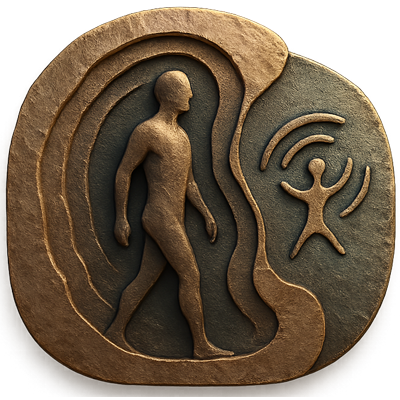
Footprints Across the Edge of the World
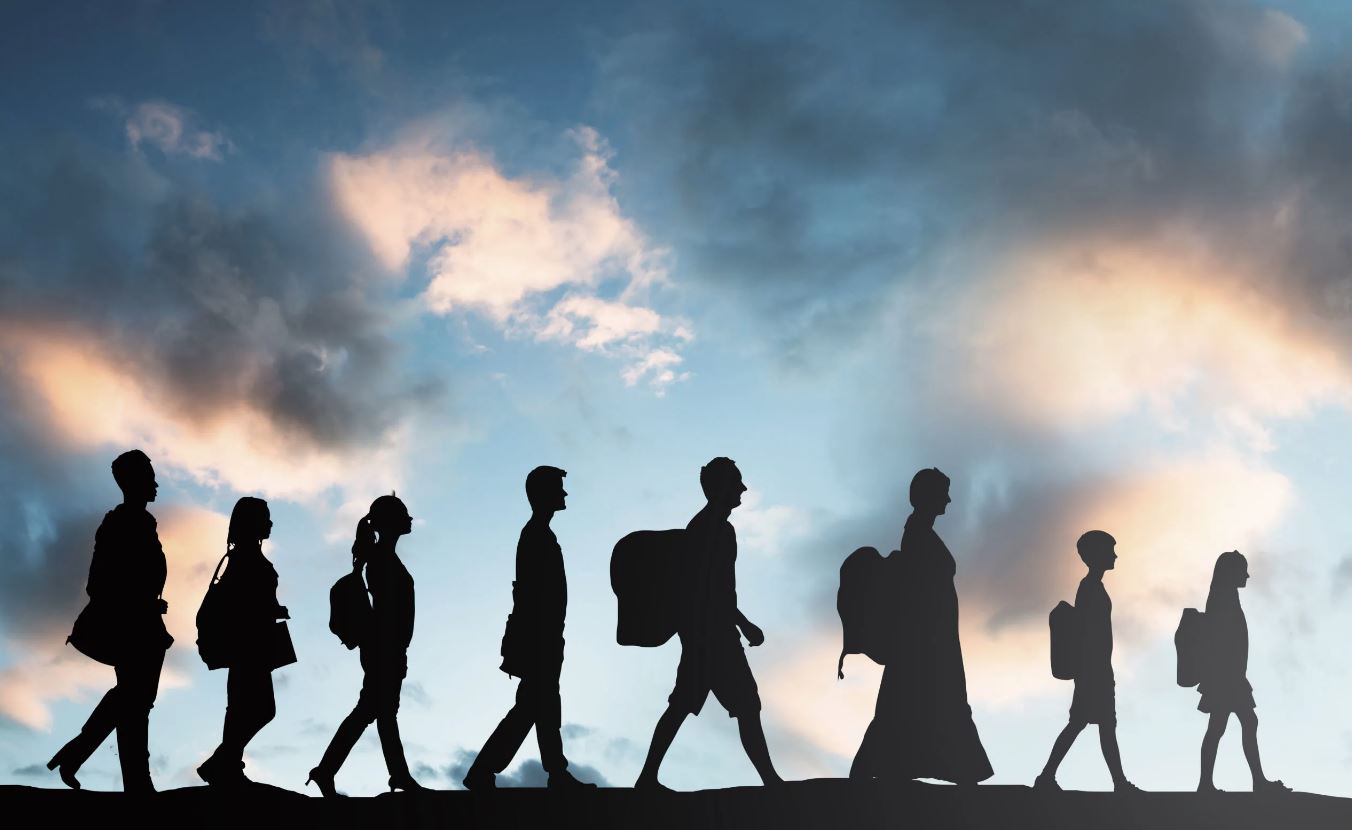
Movement became the first story of humanity and the map of our shared becoming
The beginning of departure
Every step taken by early humans carried more than survival. It carried curiosity, necessity, and the silent question of what lay beyond the horizon. Migration began long before the invention of agriculture, before writing, before names for the lands that would one day divide nations. It began when the first communities followed the rhythm of seasons and the pull of the unknown. The African continent, humanity’s earliest home, released waves of travelers who would gradually fill the globe. Fossil paths and genetic traces show how small bands of people walked through deserts, forests, and coastlines, adapting to climates and challenges they could not foresee. Their movement was not a simple escape but an exploration of possibility. To migrate was to invent identity through motion, to define belonging not by territory but by endurance. Each crossing redefined what it meant to be human, reminding us that the will to move is not a deviation from nature but its fulfillment. In the slow unfolding of these journeys, the planet itself became a vast memory, marked by footsteps that would never fully fade.
Paths through time and terrain
The routes of migration followed the pulse of the earth. Grasslands, rivers, and coastlines guided travelers across continents long before compasses or maps. The Red Sea’s narrow straits allowed crossings into the Arabian Peninsula, while the Levant offered a corridor into Eurasia. Ice ages sculpted temporary bridges that connected worlds, and when glaciers withdrew, oceans replaced them, isolating regions that had once been neighbors. Yet isolation never endured for long. Wind, hunger, and imagination continued to send people onward. Archaeological sites in places like Shanidar, Skhul, and Lake Mungo testify to humanity’s capacity for adaptation. The same species that thrived in the tropics learned to endure the chill of Europe and the thin air of mountain valleys. The story of migration is also a story of tools and fire, of skins stitched for warmth, of shelters made from bone and reed. Each innovation extended the reach of endurance, allowing people to settle in terrains that had once seemed unlivable. Movement was both an act of defiance and an act of learning. To journey was to translate landscape into knowledge, a practice that would one day evolve into geography, astronomy, and story itself.
The crossing into memory
As generations moved farther from their origins, migration ceased to be only physical. It became a migration of mind, of myth, of memory. Stories began to follow the trails that bodies left behind. Ancestors who had walked rivers and deserts became spirits who watched over descendants. Mountains were given sacred names, seas were filled with legends, and stars were mapped as companions for those who traveled by night. Migration created the earliest cosmologies. The human need to orient within space turned into a need to orient within meaning. Oral traditions preserved both routes and reasons. Songs carried geography, and rituals carried remembrance. The patterns of movement became metaphors for birth, death, and rebirth. In every ancient society, the traveler symbolized transformation, for to move through the unknown was to meet the self anew. Anthropology reveals that even when groups settled, they never abandoned the mythic memory of movement. Festivals, pilgrimages, and trade routes maintained the pulse of travel. The body might rest, but imagination continued its migration through time, ensuring that the experience of motion remained central to culture’s identity.
Encounters that shaped the species
Human migration did not unfold in solitude. Along the vast trails of prehistory, different branches of the genus Homo met, mingled, and sometimes merged. Neanderthals, Denisovans, and other now-lost relatives shared valleys, interbred, and exchanged tools with early Homo sapiens. These meetings left both cultural and genetic legacies. The traces of ancient interbreeding live within modern genomes, subtle reminders of shared ancestry that defy the idea of isolation. Migration blurred boundaries between populations long before nations existed. Encounters brought exchange as well as conflict, cooperation as well as competition. The borrowing of tool designs, the sharing of fire management, and the transfer of hunting strategies reveal that humanity’s evolution was collective. No group thrived entirely alone. Every advancement carried the fingerprints of contact. Migration thus became the laboratory of civilization, a continual testing ground for adaptation and diversity. Each convergence widened the range of what it meant to be human, adding new languages, techniques, and customs to the growing mosaic of our species. The result was not uniformity but resilience, the realization that survival depended upon variety as much as upon strength.
The formation of the migratory imagination
When migration became habitual, imagination adapted alongside it. The human mind began to anticipate movement, to plan routes and envision futures beyond the visible horizon. This cognitive leap transformed migration from reaction into strategy. Communities began to chart seasons, to predict animal migrations, and to identify celestial markers that signaled when it was time to move. Such foresight required cooperation and trust, qualities that strengthened social bonds. Over time, migration developed rituals of departure and return, songs to mark the road, and art that recorded landscapes of memory. Handprints along ancient rock shelters in Australia, boat carvings in Scandinavia, and footprints fossilized in volcanic ash all serve as evidence that migration became a story humans told about themselves. The migratory imagination also created empathy. Those who walked long distances understood change as natural, and strangers as potential allies rather than threats. The shared experience of journeying forged a psychological continuity that transcended tribe and territory. Migration, in this sense, was not only a biological success but a moral education, one that taught humanity to recognize kinship in diversity and belonging in motion.
The birth of settlement and the memory of motion
Eventually, some migrants found places abundant enough to stay. Agriculture offered stability, and rivers turned into boundaries of community. Yet even as villages became cities, migration continued to echo within human behavior. Traders retraced old routes, nomads connected distant settlements, and stories of origin preserved the memory of wandering. The urge to move never disappeared. It shifted into new forms, such as exploration, pilgrimage, and commerce. Settled life brought innovation, but it also brought nostalgia for the open horizon. Myths of lost paradises and promised lands reveal that ancient people never fully let go of the migratory dream. Even today, architecture and language preserve the rhythm of movement. Streets follow the lines of older trails, and words for journey or road appear in countless metaphors for growth and transformation. Settling did not end the story of migration. It made it cyclical. Civilizations rose and fell as populations expanded, collided, and reformed elsewhere. The idea of homeland became intertwined with the idea of exile, ensuring that motion would remain one of humanity’s defining traits, even when rootedness became its visible condition.
Migration as the mirror of adaptation
Every era reinterprets migration according to its fears and hopes. In ancient times it symbolized exploration. In modern times it can evoke anxiety. Yet beneath these shifting perceptions lies the same truth: migration is adaptation made visible. Climate change, famine, and conflict have always driven people to move, but so too have curiosity and the pursuit of connection. Genetic evidence shows that movement has shaped physiology, immunity, and language. Cultures that migrated across diverse terrains developed flexible thinking, new diets, and complex social systems. Even today, cities formed by migration thrive on creative tension, blending differences into innovation. Migration forces societies to redefine belonging and to update empathy. It dissolves the illusion of permanence by revealing how identity is always relational. To trace its history is to confront the paradox that stability grows out of motion, that tradition is the residue of endless adaptation. The journey outward is also a journey inward, revealing how each generation reconfigures humanity’s shared inheritance to meet new landscapes and new challenges without losing the rhythm of ancient movement.
The modern echo of ancient paths
Contemporary migration, accelerated by technology and global interdependence, mirrors the same forces that shaped our beginnings. Airplanes follow routes once traced by caravans. Digital communication recreates the web of exchange that ancient travelers built with spoken word and barter. Yet the moral complexity of modern migration reveals how fragile empathy can be when distance is reduced but difference remains visible. Borders and policies often forget that movement is the foundation of civilization itself. Anthropology reminds us that every city, every language, and every idea we inherit is the result of migration. The foods we eat, the faiths we practice, and the knowledge we share were all carried by travelers who refused to remain still. Modern science continues to uncover evidence that humans have never been stationary for long. Even within settled populations, genetic variation tells stories of continual motion. The echo of ancient migration still vibrates through airplanes, ships, and data cables, linking us to a world where travel remains both necessity and possibility. To acknowledge this continuity is to honor the restlessness that first taught us who we are.
The journey that never ends
Migration is not a chapter of history but the fabric of existence. It shaped the planet’s diversity, sculpted cultures, and wove connections that continue to define our world. Every journey, whether across continents or generations, repeats the first steps taken by ancestors who trusted the horizon more than fear. The footprints they left behind are not just traces in soil but symbols of endurance, imagination, and hope. Civilization exists because humanity learned to move toward uncertainty and transform it into understanding. The road that began in prehistory still unfolds, crossing oceans and orbiting satellites, carrying the same question that has guided every traveler: what lies beyond the next boundary? The answer remains the same as it was in the beginning. Movement itself is the answer. It is the proof that life seeks relation, that knowledge grows from encounter, and that humanity’s true home is not a single place but the shared journey across the ever-widening face of the earth.